PROTECTING YOUR FUTURE: THE VITAL ROLE OF IONM IN BRAIN AND SPINE SURGERY
When a patient faces brain or spine surgery, the primary goal is simple yet profound: a successful recovery with all functions intact. In the modern operating room, achieving this goal is no longer a matter of "wait and see." Thanks to advanced technologies like Intraoperative Neurophysiological Monitoring (IONM), neurosurgical teams now have a "GPS for the nervous system" that works in real-time to protect patient safety. As a specialist in Neuroanaesthesia and Neurocritical Care in Hyderabad, I prioritize the use of IONM to ensure that every delicate maneuver is guided by the highest standards of precision.
What is Intraoperative Neurophysiological Monitoring (IONM)?
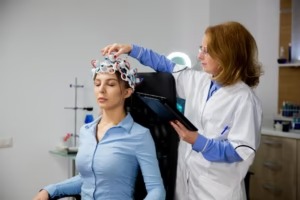
Think of your nervous system as an intricate electrical grid. During surgery, surgeons work near vital "cables"—nerves that control your ability to move, feel, speak, or see. IONM is a continuous test of these electrical pathways while the patient is under anesthesia. By placing tiny, specialized sensors on the body, we can listen to the "chatter" of your brain and spinal cord. If a nerve becomes stressed or compressed during the procedure, the IONM system alerts us immediately—often before any permanent damage occurs.
Why is IONM a Game-Changer for Patients?
Traditionally, doctors could only assess a patient’s neurological health after they woke up from surgery. IONM changes the timeline from "after the fact" to "right now."
1. Real-Time Safety Alerts If the surgical team moves near a sensitive area, the IONM system provides an instant warning. This allows the surgeon to adjust their technique or pause, preventing long-term complications like weakness or loss of sensation.
2. Greater Precision in Complex Cases Whether it is removing a brain tumor, correcting a spinal deformity (scoliosis), or performing an awake craniotomy, IONM acts as a high-tech guide. It helps distinguish between diseased tissue and healthy, functional nerves.
3. Faster Recovery and Peace of Mind By minimizing the risk of "surgical insults" to the brain and spine, IONM leads to better post-operative outcomes. Patients often experience fewer complications, which can lead to shorter hospital stays and a smoother journey back to daily life.
The Role of the Neuroanaesthesiologist
Many patients don’t realize that IONM is a team effort. As a Neuroanaesthesiologist, my role is to maintain a "neuro-friendly" state. We use specialized techniques like TIVA (Total Intravenous Anaesthesia) and TCI (Target Controlled Infusion). Unlike standard gases, these methods allow the electrical signals from the brain to remain clear and "loud" enough for the monitoring equipment to read accurately. We are essentially tuning the radio so the surgeon can hear the signal perfectly.
Summary: Your Safety is Our Priority
Medicine has evolved. Today, neurosurgery is safer than ever because we don't just rely on scans—we monitor function in real-time. If you or a loved one is scheduled for a neurosurgical procedure, ask your specialist about IONM. It is one of the most powerful tools we have to ensure that you leave the operating room not just treated, but protected.